
Niggle or injury? When to run through pain
Not every ache means stop. Here's how to tell the ones to keep an eye on from the ones to get checked.

It starts as a small thing. A tight Achilles for the first few steps out the door. A knee that grumbles on the downhill, then goes quiet. By the second mile you've forgotten about it. By Thursday you're wondering whether you should have stopped.
Most runners have been there, and most keep going. Sometimes that's fine. Sometimes it's how a niggle turns into weeks off. Here's what research says about running with pain, what an old injury has to do with it, and when to see someone.
The short answer
Not all running pain means stop. A mild ache that stays steady, doesn't change how you run and is no worse the next morning is often something to keep an eye on. Pain that makes you limp, builds during a run, is worse the next day or sits on one spot of bone is worth getting checked.
Is it ever OK to run with pain?
Plenty of runners do it anyway. In a survey of 1,145 UK parkrun runners, 570 had a current injury, and 86% of them were still running, even though the pain was affecting their performance and cutting how much they ran.1
86%of the injured parkrun runners in one survey were still running.1
And it isn't always a mistake. In one trial, 38 people with Achilles tendon pain followed the same rehab program. Half kept running and jumping, using a pain-monitoring model to guide how much they did. The other half stopped those activities for six weeks. Both groups improved, with no significant difference in how fast. The researchers found no negative effects from staying active this way.2
That was a guided program for one kind of tendon pain, not a free pass. But some pain, watched closely, can sit alongside running.
What's the difference between a niggle and an injury?
There's no exact line, but a few signs help. A niggle tends to be mild and dull. It may ease once you warm up, it doesn't change how you run, and it's no worse the next morning.
Pain on one spot of bone needs more care. Bone stress injuries show up as localized bone pain and tenderness, and they sit on a scale: a stress reaction can progress to a stress fracture.3
Does pain change how you run?
It can. In one lab study, researchers gave 19 healthy people temporary knee pain with a saltwater infusion just below the kneecap, then watched them run. With the pain, one hip muscle and two thigh muscles switched on less, each by an average of 17%.4
The link shows up the other way round too, as an association. A review of 28 studies found moderate evidence that runners with pain around the kneecap move differently at the hip. The authors called it limited but coherent evidence, in women.5
So how you move and how you feel are connected, but which came first isn't always clear. What you've asked of your legs lately matters too: a longer week, more hills, new shoes.
Does an old injury make a new one more likely?
It's one of the more consistent findings in running research. Two systematic reviews of injury risk factors both found that a history of previous injury was associated with a higher risk of running injury.6,7
Some injuries also take longer to settle than they seem. Recovery from Achilles tendon pain can take up to a year, and it has a high chance of coming back, especially while returning to sport.8
None of this means you're bound to get hurt again. It's a reason to give the spot that hurt before a little more attention, and to build back up gradually.
What's worth noting when something hurts?
Memory is a poor training log. A few plain notes are enough: where it hurt, which side, how much on a 0–10 scale, and how it felt the next morning. How that moves over a few days tells you more than one bad mile.
Add what else changed that week. Over time, those notes help you, or a physio, see whether the pain follows the long run, the new shoes or the hill repeats.
When should you see a physio or doctor?
See a physio or doctor if the pain changes how you run, like a limp or a shorter step on one side. The same goes for pain that gets worse as the run goes on or is worse the next morning, sharp pain, or pain on one spot of bone that's tender to press.
Swelling, and pain that shows up at night or when you're resting, are also reasons to get checked. So is pain that hasn't improved after a couple of weeks.
You don't have to wait until you can't run. A physio can look at the painful spot, ask about your training and help you plan a way back.
Note what hurt, right after the run
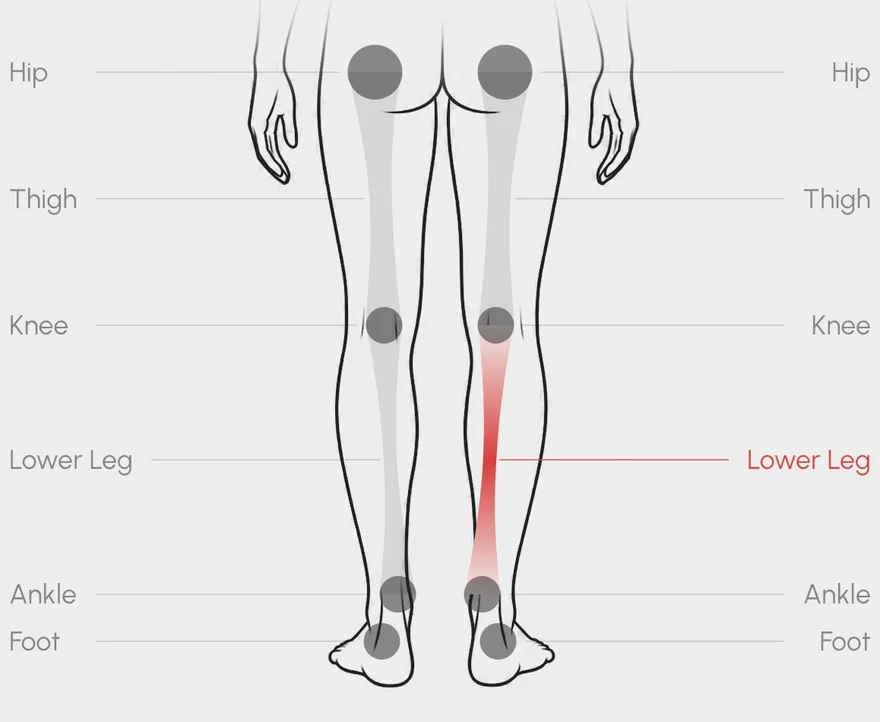
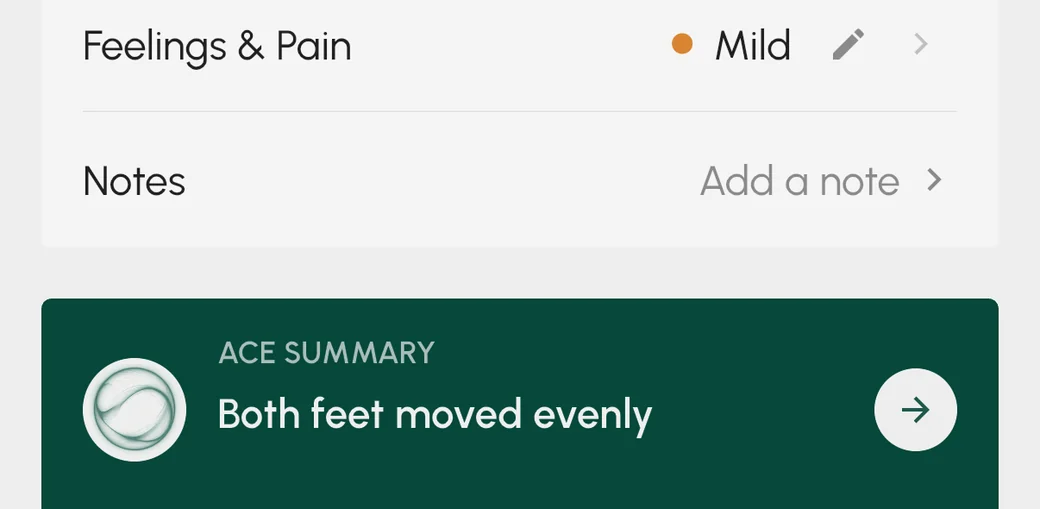
After each run, the STRIV app's pain check-in asks whether anything hurt. You rate it from 0 to 10 and tap the spot on a body map, and it's saved with that run. Ace keeps track and checks in on how that spot feels.
Find it: How did it feel?, the screen you see after each run.
Where and how much
Rate it from 0 to 10, then tap the spot on a body map: hip, thigh, knee, lower leg, ankle or foot on either side, or glute, lower back or somewhere else.
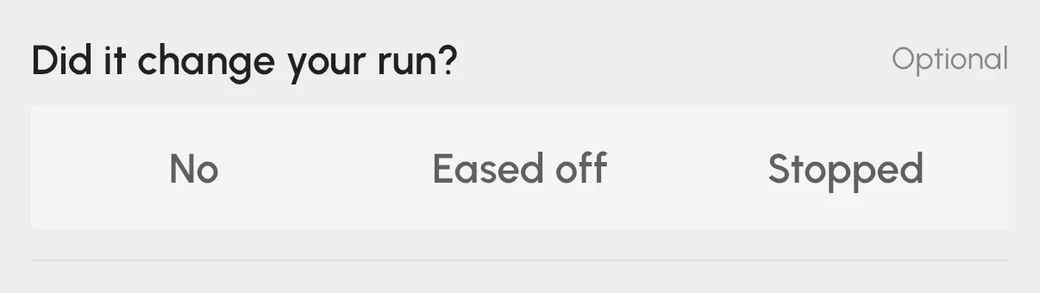
Did it change your run
Note whether you kept going, eased off or stopped. It all stays on the run's page, and you can edit it later.
Ace checks in
On later days, Ace asks how that spot feels, shows your past runs with pain there and lists the signs that mean it's time to get checked.
Common questions
Should I run through shin pain?
Pain on one spot of the shinbone that's tender to press is different from a general ache. Localized bone pain and tenderness are how bone stress injuries show up, so get it checked before you keep running.3
Is it OK to run with Achilles pain?
Sometimes, with guidance. In one trial, people with Achilles tendon pain who kept running while monitoring their pain improved at a similar rate to those who stopped for six weeks. Both groups were also doing a rehab program.2
If it's getting worse, see a physio.
Does bad running form cause pain?
I've been injured before. Should I worry?
Is the pain check-in medical advice?
No. It's a log of what you felt, and Ace's check-ins are general guidance, not a diagnosis. If pain gets worse, affects your walking, or comes with swelling, numbness, a pop or pain in one spot on the bone, see a physio or doctor before running again.
References
- Running with injury: A study of UK novice and recreational runners and factors associated with running related injuryLinton L, Valentin S. Journal of Science and Medicine in Sport, 2018.
- Continued sports activity, using a pain-monitoring model, during rehabilitation in patients with Achilles tendinopathy: a randomized controlled studySilbernagel KG, Thomeé R, Eriksson BI, Karlsson J. American Journal of Sports Medicine, 2007.
- Management and prevention of bone stress injuries in long-distance runnersWarden SJ, Davis IS, Fredericson M. Journal of Orthopaedic & Sports Physical Therapy, 2014.
- Simultaneous ice and transcutaneous electrical nerve stimulation decrease anterior knee pain during running but do not affect running kinematics or associated muscle inhibitionKwon S et al.. Clinical Biomechanics, 2020.
- Runners with patellofemoral pain have altered biomechanics which targeted interventions can modify: A systematic review and meta-analysisNeal BS, Barton CJ, Gallie R, O'Halloran P, Morrissey D. Gait & Posture, 2016.
- Risk and Protective Factors for Middle- and Long-Distance Running-Related InjuryHulme A, Nielsen RO, Timpka T, Verhagen E, Finch C. Sports Medicine, 2017.
- Injuries in runners; a systematic review on risk factors and sex differencesvan der Worp MP et al.. PLoS One, 2015.
- A Proposed Return-to-Sport Program for Patients With Midportion Achilles Tendinopathy: Rationale and ImplementationSilbernagel KG, Crossley KM. Journal of Orthopaedic & Sports Physical Therapy, 2015.
STRIV turns repeated pressure and motion signals into a personal view of how running mechanics change over time. Insights are educational, not a medical diagnosis, and they do not predict injury or measure race fitness.