
Does your running form change with different shoes?
A new pair can change how you land and where the load goes. How much it changes depends on you.
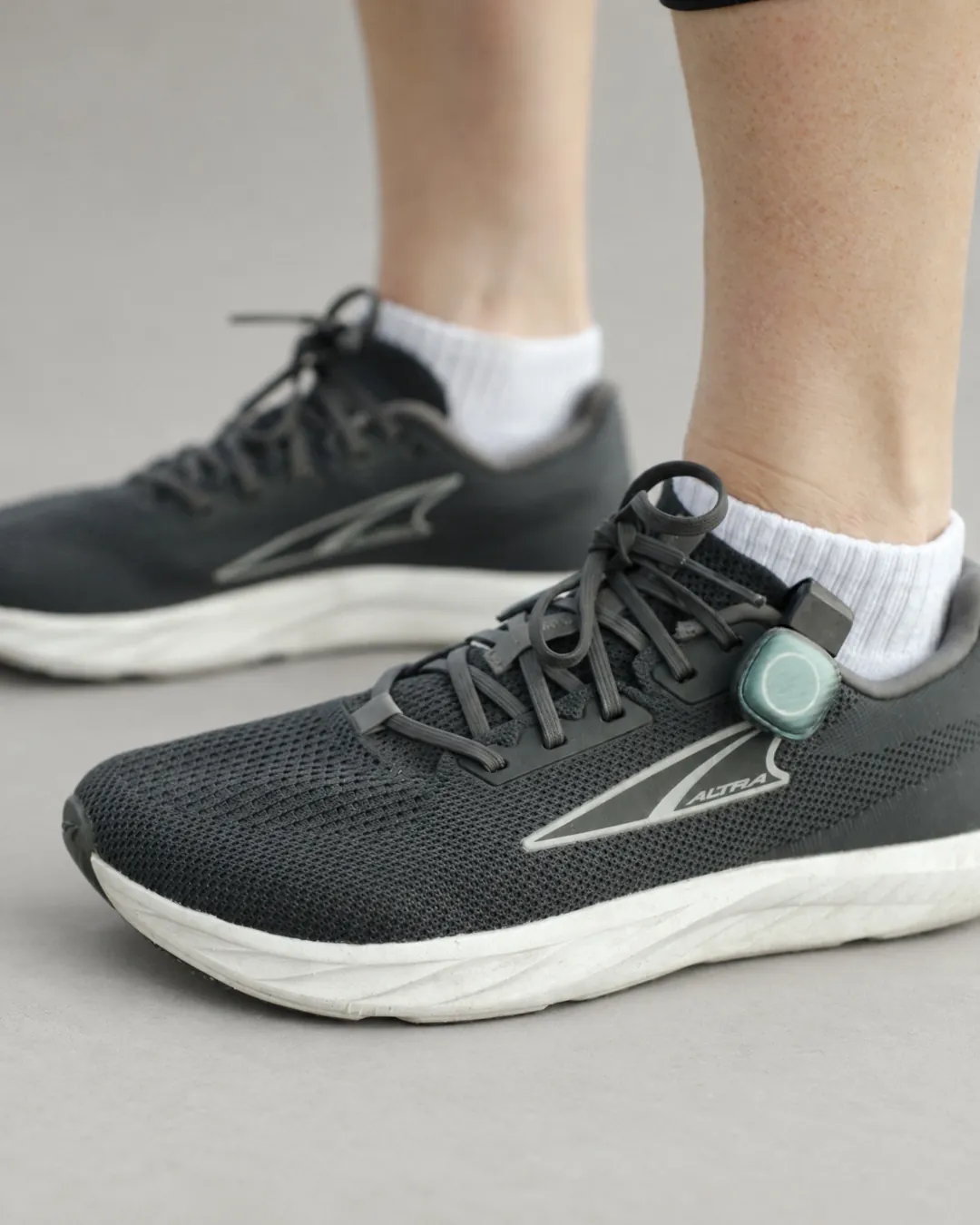
You probably own more than one pair. One for Tuesday intervals, one for the long run, one that has quietly become your dog-walking shoe. You picked each for a reason: a review, a friend, the way it felt in the shop.
None of those reasons tells you what happens at mile 8, when you've stopped thinking about your feet. Does your stride change when you change pairs? Research says it can, and that runners don't all respond the same way. Here's what's known, and how to check it in your own runs.
The short answer
Yes, it can. Shoes can change how you land and where load goes through your foot and leg, and runners don't all respond the same way. Matching shoes to your arch type hasn't been shown to cut injuries. The most useful test is your own: similar runs, different pairs.
Do shoes change how you land at all?
They can. The modern running shoe only arrived in the 1970s. When researchers compared runners who habitually go barefoot with runners used to shoes, the barefoot group often landed on the front of the foot first. The shod runners mostly landed heel first, which the raised, cushioned heel of a modern shoe makes easier.1
Taking shoes off doesn't change everyone's stride the same way, though. In a study of 38 adults from a community in northern Kenya who run barefoot, most landed heel first at their endurance pace, and more of them moved toward the front of the foot as they sped up. The researchers suggested that speed, training and the ground underfoot all play a part.2
Should your arch type choose your shoe?
It's a familiar idea: low arches need motion control, high arches need cushioning. The US military tested it in three trials with more than 7,000 recruits in basic training. Recruits given shoes matched to the shape of their foot were injured about as often as recruits who all got the same stability shoe.3
A smaller trial put 81 women training for a half marathon in neutral, stability or motion-control shoes. The pairing a foot-type chart would suggest didn't reliably come out best. Among women with pronated feet, those in a stability shoe reported more pain while running than those in a neutral one.4
Your arch shape is part of how your foot works. On its own, it isn't a shoe prescription.
What can shift when you switch pairs?
Shoes differ in foam, stiffness, weight and shape. Today's springy, plated racing shoes show how much that can matter. A 2026 expert statement reports that runners use about 2–4% less energy at the same pace in them.5
2–4%less energy at the same pace in springy, plated racing shoes, in a 2026 expert statement.5
The same shoes can also shift where the load goes: possibly more stress on the bones of the foot, and less on the shin and perhaps the Achilles. Whether that changes injury risk is still unclear.5
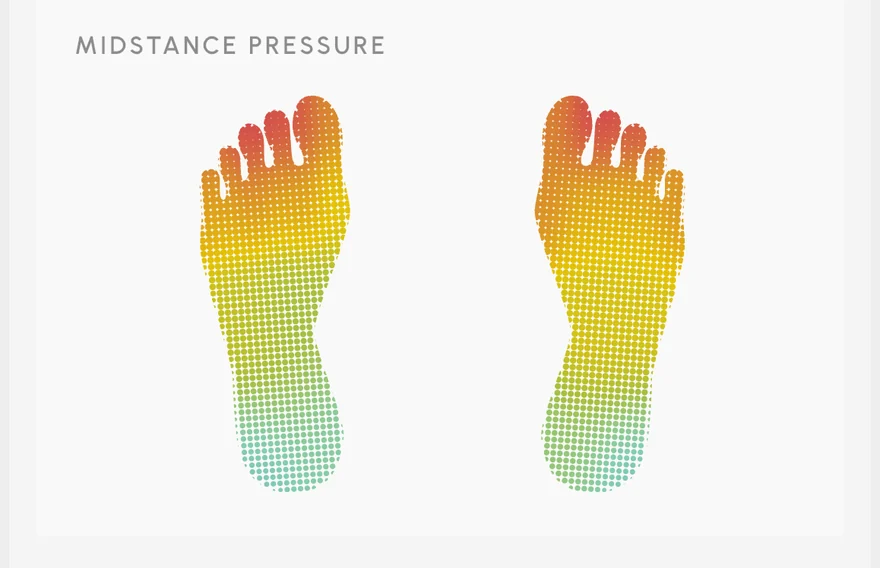
Where pressure sits under your foot can change between pairs too. Our foot pressure guide covers that part in detail.
Why can't a shoe review answer this for you?
Because the same shoe doesn't do the same thing for everyone. The expert statement noted large differences from runner to runner, both in the energy saved and in what the shoes might mean for injury, and the reasons are still unclear.5
Comfort is a reasonable place to start. One group of researchers has proposed that when runners pick the shoe that feels most comfortable, they tend to pick one that lets them keep moving the way their body prefers. That idea is still being tested, and a shoe that feels great in the shop hasn't yet told you what happens at mile 8.6
So how do you find out for yourself?
Treat each pair as a small experiment, measured against your usual. A run in new shoes isn't good or bad on its own. What matters is whether it looks and feels like your normal runs on the same kind of day.
A new pair is one change. Keep the rest as similar as you can, so that if something feels different, you know where to look.
Put two pairs side by side
Shoe Center in the STRIV app gathers the runs you've done in each pair, with their distance and pace. Pick two pairs and compare them on easy runs or runs at a similar pace, so a new shoe is measured against your usual.
Find it: The Movement Profile tab, under Your Shoes.
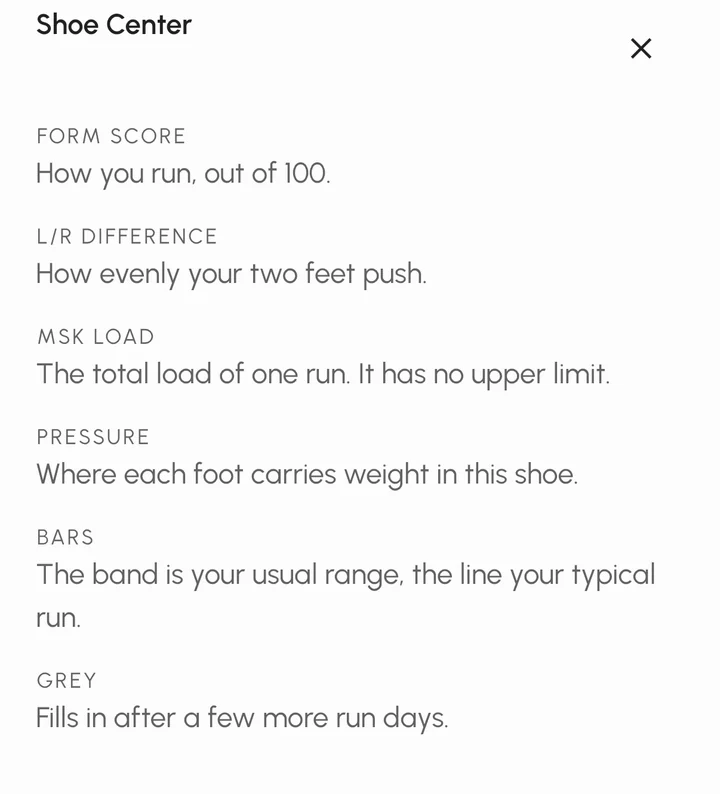
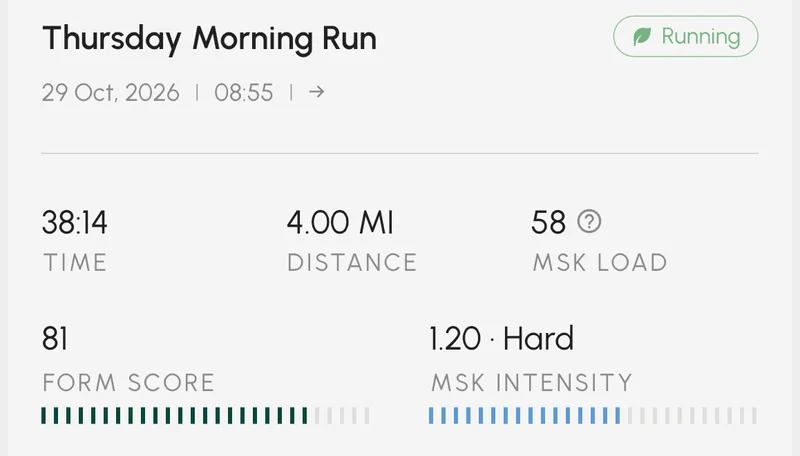
Every run in a pair
Runs, distance and pace for each pair, and each run listed with its Form Score and MSK Load.
Next to your usual
Form Score, left and right difference and MSK Load each sit on a bar. The band is your usual range, the line your typical run.
Two pairs, like for like
Add a second pair and Compare puts them side by side: all runs, only easy runs, or runs at a similar pace.
Common questions
Will minimalist shoes make me land on my forefoot?
Not necessarily. Even among adults who habitually run barefoot, most landed heel first at their endurance pace in one study.2
Should I choose running shoes based on my arch type or pronation?
Arch type alone isn't a reliable guide. In the military trials, matching shoes to arch height made little difference to injury rates for men or women.3
How a pair feels on your own runs is a more practical starting point.
Why does a new pair feel different on the same route?
Shoes differ in foam, stiffness, weight and shape. For racing shoes, researchers have proposed that features like these change how much work your muscles do and where load goes, so it's no surprise a new pair feels different.5
How do I compare two pairs fairly?
Keep everything else as similar as you can. Run the same route at a similar easy pace, on days when you feel about equally fresh, and jot down how each run felt.
One run in each pair is a hint. A few runs in each start to show a pattern.
Does a more comfortable shoe change how I run?
No one can say for sure yet. In a six-month study of 527 recreational runners, those who liked their shoes most overall were injured less often. That's an association, and it doesn't show what comfort does to your stride.7
How do I link a run to a shoe?
Choose the pair in the Shoes row when you set up a run. You can also pick it on How did it feel? after the run, or later from the run's page.
References
- Foot strike patterns and collision forces in habitually barefoot versus shod runnersLieberman DE et al.. Nature, 2010.
- Variation in foot strike patterns during running among habitually barefoot populationsHatala KG, Dingwall HL, Wunderlich RE, Richmond BG. PLoS One, 2013.
- Injury-reduction effectiveness of prescribing running shoes on the basis of foot arch height: summary of military investigationsKnapik JJ, Trone DW, Tchandja J, Jones BH. Journal of Orthopaedic & Sports Physical Therapy, 2014.
- The effect of three different levels of footwear stability on pain outcomes in women runners: a randomised control trialRyan MB, Valiant GA, McDonald K, Taunton JE. British Journal of Sports Medicine, 2011.
- Advanced Footwear Technology in Distance Running: What We Know, What We Don't Know, and Future DirectionsVan Hooren B et al.. European Journal of Sport Science, 2026.
- Running shoes and running injuries: mythbusting and a proposal for two new paradigms: 'preferred movement path' and 'comfort filter'Nigg BM, Baltich J, Hoerzer S, Enders H. British Journal of Sports Medicine, 2015.
- Association of Shoe Cushioning Perception and Comfort With Injury Risk in Leisure-Time Runners: A Secondary Analysis of a Randomised TrialMalisoux L, Delattre N, Urhausen A, Morio C, Theisen D. European Journal of Sport Science, 2025.
STRIV turns repeated pressure and motion signals into a personal view of how running mechanics change over time. Insights are educational, not a medical diagnosis, and they do not predict injury or measure race fitness.